Fauna Fantastica
The hallmark animals of the Emerald Coast
The Northwest Florida Panhandle is uniquely positioned to represent a diversity in ecosystems. The Panhandle is split into two ecoregions: the Southeastern Plains (inland) and the Southeastern Coastal Plain (nearshore). Our inland environments boast pine forests, rolling hills, and diverse plains, while the coast is made up of wetlands, uplands, flatlands, marshes, and swamps. Throughout these two ecoregions, a variety of species thrive. Vital keystone species regulate our ecosystems, and flagship creatures add recognizable character to natural environments, reminding the public that nature is worth fighting for.
EMERALD COAST KEYSTONES
In the 1960s, five scientists with similarly curious minds came together to answer one key ecological question: How do species within an ecosystem affect one another?
Bob Paine, Jim Estes, Mary Power, Tony Sinclair, and John Terborgh together pored over decades of field research to identify the impact of each species within an ecosystem. The answer brought about an important realization—not all species are created exactly equal in terms of environmental impact, and some are particularly essential. Those species became known as keystone species.
In architecture, the keystone is the central stone installed at the highest point of an arch. This stone is essential to the infrastructure of the arch; without it, the structure would crumble. The same is said of keystone species. Eliminate their essential presence, and natural order is disrupted, often resulting in the overpopulation or extinction of remaining species.

01 Gopher Tortoise
The gopher tortoise is the only tortoise species found in the Southeastern United States. A medium-sized terrestrial turtle, the gopher tortoise can weigh up to 15 pounds and measure up to 15 inches long. With short but sturdy hind legs and clawed, shovel-like front limbs, the gopher tortoise is known for its skilled digging abilities.
This specialized characteristic is what classifies the gopher tortoise as essential to its ecosystem. They can dig tunnels up to 10 feet deep and 40 feet long that serve as shelter for as many as 350 species. Without these safe dens, burrowing owls, rabbits, indigo snakes, gopher frogs, Florida mice, and a variety of invertebrate species would fall prey to others higher in the food chain, disrupting natural order.
Thanks to our warm and sunny climate, the gopher tortoise remains active in Florida year-round and tends to burrow in sandy-soil environments, like coastal dune scrubs and longleaf pine forests. They spend most of their time in their expertly excavated burrows. During the summer months, females lay nests of about six to seven eggs in a sunny opening of the burrow. As herbivores, gopher tortoises are opportunistic foragers, often grazing on low-growing plants found in their surrounding environment, such as native grasses, gopher apples, berries, and fallen fruits.
The Florida Fish and Wildlife Conservation Commission established a Gopher Tortoise Management Plan after the species was reclassified as threatened in 2007. The plan aims to minimize loss, increase populations, and enhance habitats in an effort to maintain the animal’s essential presence as a keystone species.

Photo by Mike Fender
02 Manatee
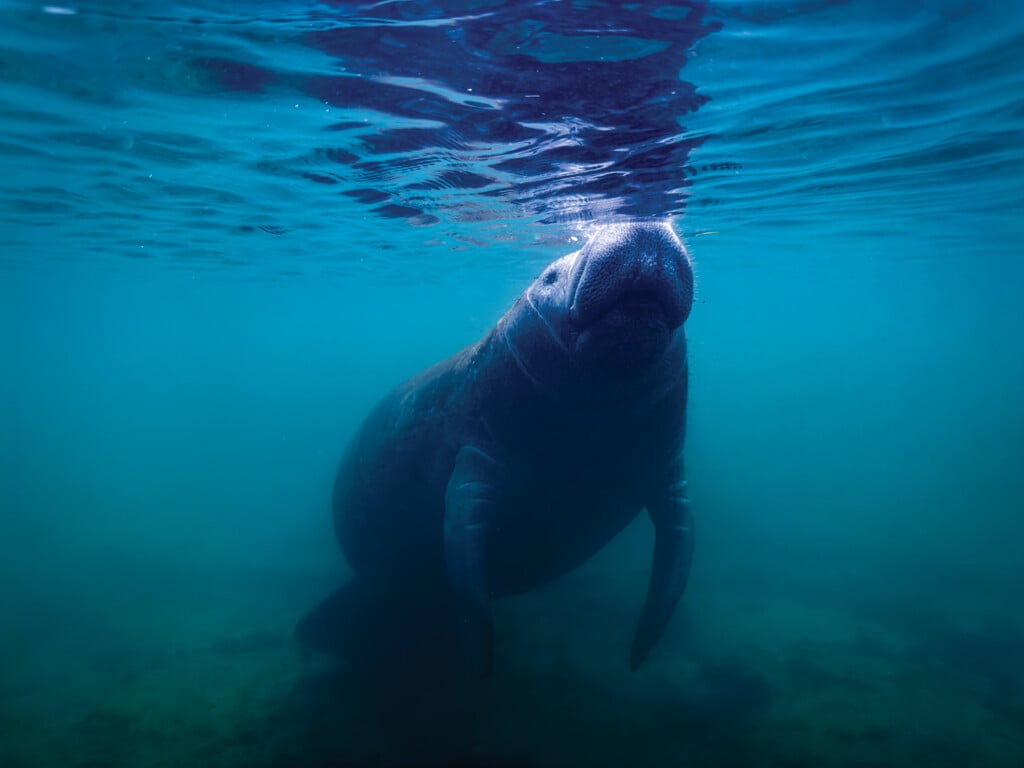
The Florida manatee has long been fondly referred to as the “sea cow” for its adorably rotund shape and herbivorous tendency to graze on seagrasses for up to eight hours a day. Manatees typically weigh around 1,000 pounds and average 9 to 10 feet in length. They prefer warm waters and travel between freshwater, saltwater, and brackish water, migrating farther south in the winter.
Among the manatee’s favored seagrass snacks are manatee grass, turtle grass, and shoal grass. They also enjoy common freshwater plants like eelgrass and coontail. Shallow-water aquatic grass meadows are essential to their environments, as they provide shelter and food source to a variety of species, help stabilize sediments and shorelines, and can affect nutrient cycles and water quality. However, invasives like water hyacinth and hydrilla can stamp out aquatic grasses before manatees get a chance to graze. Hydrilla spreads quickly into dense infestations that damage other species populations and restrict productive stream flow that prevents flooding. Water hyacinth forms mats that leave rotting plant waste, shade out native species, increase flood threats, and serve as a breeding ground for mosquitoes.
Luckily, our sea cow friends aren’t picky and are happy to eat up invasive weeds, giving important grasses the space they need. This go-with-the-flow diet is what makes the manatee so essential—remove the manatee, and hydrillas, water hyacinths, and other invasives take over, seagrasses die out, and remaining species are left without a habitat.
Manatees had been classified as an endangered species from 1973 until 2017 when an increase in population reclassified the aquatic mammals as threatened. Manatees remain a species protected by the Florida Manatee Sanctuary Act and are the official marine mammal for the state.

Photo by Mike Fender
03 American Alligator
The American alligator is only found within the United States and is native to the Southeast region, favoring freshwater rivers, lakes, marshes, and swamps of coastal wetland environments. These fierce apex predators can reach 1,000 pounds and measure nearly 13 feet long. They have large, round heads, webbed feet, and dark skin marked with bony scales.
Their notoriously sharp teeth and powerful jaws promote their carnivorous tendencies with a healthy diet of freshwater fish, turtles, frogs, birds, mice, and other rodents. Their nonselective nature means they contribute to wildlife management without prejudice to a single species. They are equipped with a long and strong tail that helps them move swiftly through the water. As cold-blooded creatures, alligators are inclined to sunbathing when seeking warmth, making the Sunshine State an ideal home.
They also are known to use their tails to dig burrows in the mud on land for temperature regulation and nesting. These burrows, when abandoned by the alligator, create habitats for other freshwater species who swoop in to use the space for water access and breeding. Without these burrows, fish, turtles, wading birds, and other water-dependent species would be otherwise exposed to dangerous predators.
Once an endangered species, conservation efforts have promoted the American alligator to a least concern classification. However, they still face the environmental threat of habitat loss.
NORTHWEST FLORIDA FLAGSHIPS
Where keystone species are essential in maintaining ecosystems, flagship species are essential in uplifting them. Flagship animals are acting ambassadors for their species, habitats, and ecosystems. These animals often appeal to the masses and offer symbolic representation.
Flagship and keystone species designations may overlap. However, where keystone species are designated based on research and observation, flagship species are selected for their charismatic nature, recognizability, and popularity with the public.
The idea for flagship designations became popularized in the 1980s as conservation advocacy was gaining traction. Animals like the giant panda, the bald eagle, the polar bear, and the Bengal tiger automatically conjure up images in our minds that inspire empathy and encourage action. At the local level, cities and states use flagship designation as environmental identifiers and mascots for local conservation efforts.

Photo by Mike Fender
01 Osprey
The osprey is not exclusive to Florida. This raptor species can be found on every continent (with the exception of Antarctica). The North American osprey, however, is common to our Gulf Coast region and can be found nesting at high vantage points, like the tops of dead or barren trees, towers, and posts. Like any Floridian, ospreys enjoy a water view and typically build their large stick-based nests on or near coasts, lakes, rivers, and swamps.
Often referred to as the sea hawk or fish hawk, ospreys are avid anglers and enjoy fishing in both saltwater and freshwater environments. Florida ospreys typically opt for catfish, mullet, spotted trout, shad, crappie, and sunfish to round out their diet.
Ospreys have a white underside and brown coloration throughout their back and wings. These raptors are often mistaken for the elusive bald eagle due to their similar size and stature. However, distinguishing features like the dark line behind the eyes and its reversible fourth toe, which assists in hunting, set ospreys apart. Bald eagles can be distinguished by their bright yellow beaks, whereas the ospreys’ are black or brown.
Ospreys have an impressive wingspan of up to six feet with a gull-like shape pointing downward while flying. Ospreys are migratory birds; however, they do identify home bases and return to them for breeding and winter seasons.
Ospreys are listed in the Florida Fish and Wildlife Conservation Commission’s imperiled species management plan and are protected by the U.S. Migratory Bird Treaty Act.

Photo by Mike Fender
02 Bottlenose Dolphin
The first animal that comes to mind when thinking of the Emerald Coast may very well be the bottlenose dolphin. Many visitors, and locals, too, have spent beach days peering through binoculars at wave crests, sitting on the bay dock at sunset, or even boarding a dolphin cruise in hopes of a sighting. And not likely are they disappointed. These marine mammals frequent our Gulf waters and enjoy playful social swims in herds offshore and in open waters.
Bottlenose dolphins are typically around 9 feet long and can weigh as much as 600 pounds. Their powerful, muscular bodies, sleek skin, and angled fins allow them to move swiftly and effortlessly through the water. They enjoy a varied diet of mullet, sheepshead, pinfish, flounder, and marine invertebrates and can ingest 20-plus pounds of food daily. This species is known for its intelligence and often works together to fish and hunt, using clicking vocalizations and echolocation to communicate.
The bottlenose dolphin is designated as Florida’s official state saltwater mammal. For the safety of dolphins and humans, it is illegal to feed, harass, or swim with bottlenose dolphins, which are protected under the Marine Mammal Protection Act of 1972. However, admiring them from a boat, beach, or dock is always encouraged.

03 Blackbear
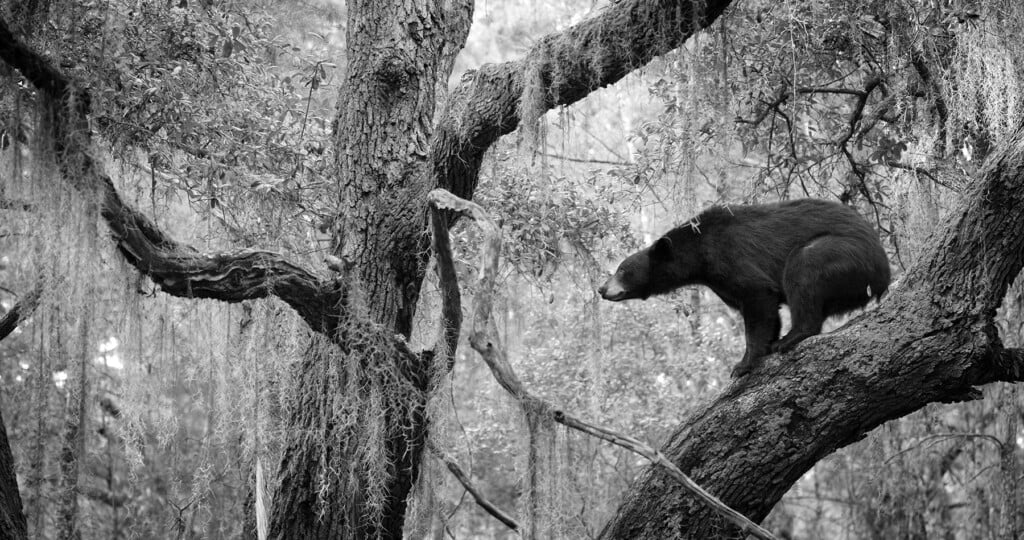
The Florida black bear is the only existing bear species in the state and can be found in swamps, flatwoods, oak scrub, and hammock environments. Females weigh up to 250 pounds and males as much as 450; however, their weight tends to fluctuate throughout the year depending on food source availability. Bears with access to human foods have been known to weigh even more due to excessive calorie intake.
Black bears are omnivores, and about 25 percent of their food source is made up of scavenged animal matter, including insects, armadillos, opossums, and turtles. Their preferred vegetarian selections often include fruit, nuts, and berries, but they also enjoy a variety of grasses, palms, and flowers. Bears can smell food up to a mile away, including scents of barbecues and disposed food waste.
Black bears mate in the summer months and spend the fall preparing for winter by bulking their daily calorie intake up to about 20,000 calories from their usual 5,000. Black bears will gain up to one-and-a-half times their body weight in preparation for winter denning, when they go into their notorious hibernation state. In Florida, black bears den for shorter periods and exhibit less lethargic behavior than bears in colder climates.
In the 1970s, Florida black bear populations dwindled to as little as several hundred throughout the state. Today, conservation efforts have brought that number up to roughly 4,000. Regulated black bear hunting was closed in 1994. It was later reopened for one season in 2015, which was cut short after 300 bears were killed in just two days. The state reopened hunting again in 2025 with a limited lottery system.