The Power of Protein
Leveling up with long-lasting nutrition
Whether on social media or in the grocery store, you’ve noticed it: Protein is everywhere. It’s now a featured component in all types of foods, from powders to chips to coffee and more. Unlike many food crazes that come and go, the benefits of protein are thoroughly backed by nutrition science.
This doesn’t mean you have to purchase the latest protein-packed product (though it could be fun to try). Instead, strive to be intentional about how much and what types of protein you consume. The result? Bountiful health benefits.
We spoke with Ciara Reistad, registered dietician, nutritionist, and owner of Optimal Health & Nutrition in Destin, about the rise in awareness of the importance of protein and why it’s here to stay on our plates.

Why do you believe there has been a rise in awareness of the importance of protein?
I believe it is due to the increase in access to information. There are so many more platforms nowadays with independent content creators challenging the status quo and questioning our health care system. Currently, our health care system is built to provide primary care, focusing on treating the symptoms of our health issues, leaving a major gap in preventive care. One of the main components of preventative medicine is nutrition, which includes macronutrients: protein, carbohydrates, and fats. People want to improve their dietary intake—specifically protein—to live a sustainable, healthy lifestyle. People want to improve their dietary intake—specifically protein—to live a sustainable, healthy lifestyle.
Where do the benefits of protein come from?
When we think of protein, we think of muscles, but protein is important for much more than muscle maintenance and growth. The benefits of protein come from the building blocks of protein: amino acids and peptides. When digested, protein is broken down into amino acids that play specific roles in the body. While consuming enough protein is important, the amino acid composition is just as important. There are 20 amino acids in two categories: non-essential and essential. The body can naturally create non-essential amino acids, while essential amino acids must come from our diet. A dietary product containing all nine essential amino acids is called a complete protein. Most animal products like eggs, steak, chicken, fish, and dairy are complete proteins, but most plant-based proteins need to be paired to make a complete protein. For example, combining grains and legumes or nuts and seeds will make up a complete protein.
There are many other factors that influence the nutritional composition of an animal or plant product, such as an animal’s living conditions and diet, pesticide use on crops, and whether the product is genetically modified.
What are some ways to ensure people are achieving their protein goals?
First, you need to determine what your protein goals are. For daily protein intake, I like to stick around .8 to 1 gram of protein per pound of ideal body weight. Once you have your goals, always plan each meal around your protein. For example, if you have a lighter breakfast and a larger lunch and dinner, plan to have a larger protein portion during those later meals. Another tip is to have an idea of how much protein is in different food items. You don’t need to get crazy and use a scale, but it is nice to know 8 ounces of chicken breast is about 60 grams of protein, three eggs contain 21 grams of protein, and 2 tablespoons of peanut butter is about 9 grams
of protein.
What are some tips for those who don’t eat meat? As a vegetarian or vegan, you may need to be more diligent with planning your meals and snacks to successfully consume enough protein daily. Because [plant-based] food or drink items are mostly lower in protein compared to animal proteins, you can double up or combine multiple protein items to help meet protein needs. You can also add nuts, nut butters, or seeds like hemp hearts to any meal or sauce to help increase protein.
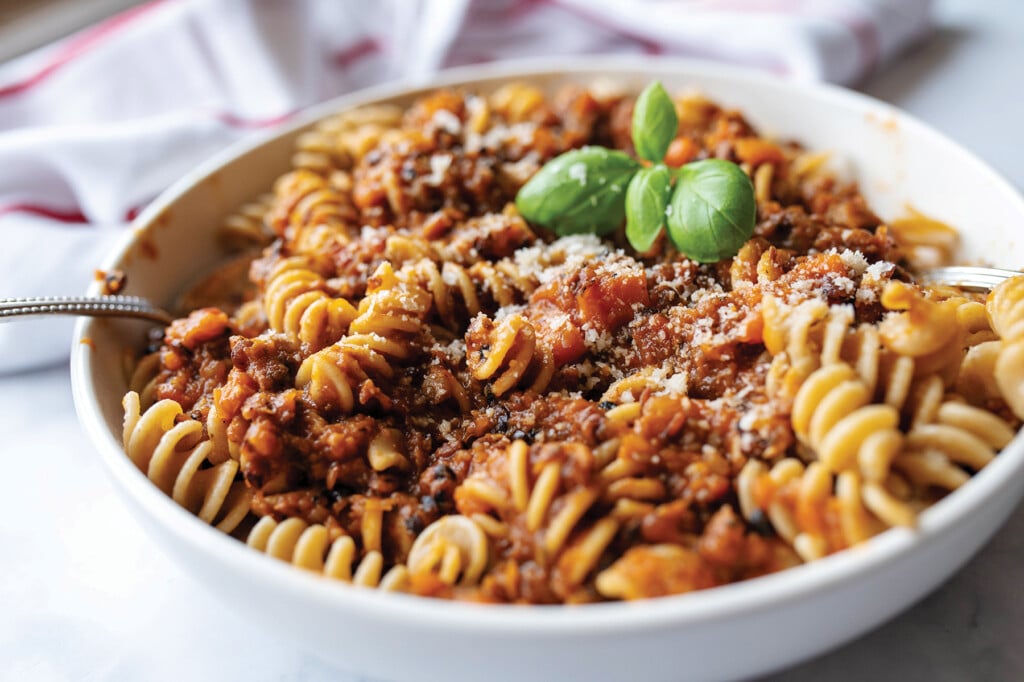
Vegan Bolognese
Recipe courtesy of PlantYou
Ingredients
2 oz. whole wheat
pasta cooked as per packaging instructions
1 tbsp. olive oil
½ yellow onion,
finely diced
2 cloves garlic, minced
1 tsp. dried oregano
3 tbsp. nutritional yeast
½ tsp. sea salt
1 tbsp. balsamic vinegar
2 tomatoes, diced
1 cup cremini
mushrooms, chopped
½ cup dry red lentils
1 cup vegetable broth
2 cups tomato pasta sauce
Vegan Parmesan cheese optional, garnish only
Instructions
1. In a pot over medium heat, add the onion, garlic, and olive oil. Cook until softened, approximately 2 minutes.
2. Add the oregano, nutritional yeast, and salt and cook for an additional minute until fragrant.
3. Stir in the cremini mushrooms and diced tomatoes and allow to cook down for approximately 2 more minutes. Add the red lentils, broth, and tomato sauce at this point.
4. Bring the sauce to a boil, then simmer over medium heat for approximately 20 minutes until the lentils are cooked through.
5. In the meantime, cook pasta according to packaging instructions. Drain the liquid and serve with your lentil bolognese!
6. If desired, top with vegan Parmesan.
Nutrition
Calories: 459.3kcal
Carbohydrates: 93g
Protein: 23.9g | Fat: 2.5g Saturated Fat: 0.4g
Polyunsaturated Fat: 0.8g
Monounsaturated Fat: 0.5g
Sodium: 1151.7mg
Potassium: 1138.2mg
Fiber: 11.5g | Sugar: 8.5g
Vitamin A: 1193.4IU
Vitamin C: 19.5mg
Calcium: 89.3mg | Iron: 6.8mg

Tofu Chocolate Mousse
Recipe courtesy of PlantYou
Ingredients
1 340 g. block extra firm tofu
3 tbsp. maple syrup
1 tsp. vanilla extract
2 tbsp. cocoa powder
3 scoops vegan chocolate
protein powder
⅓ cup coconut milk
Pinch salt
Instructions
Combine all ingredients in a blender until smooth, adding more liquid as needed to thin. Store in a sealed container in the fridge for up to 4 days.
Nutrition
Calories: 324.7kcal | Carbohydrates: 27.7g | Protein: 38.1g | Fat: 10.3g
Saturated Fat: 7.7g | Polyunsaturated Fat: 0.9g | Monounsaturated Fat: 0.9g Sodium: 461.4mg | Potassium: 266.5mg Fiber: 4.4g | Sugar: 18.3g
Vitamin C: 0.4mg | Calcium:
126.4mg | Iron: 8.5mg

Cauliflower Salad with Creamy Tofu Dressing
Ingredients
1 head cauliflower, broken into florets
1 sweet potato, chopped
1½ cups chickpeas (approximately 1 can), drained and rinsed
1 tbsp. extra virgin olive oil
2 tsp. paprika
1 tsp. cumin
½ tsp. garlic powder
1½ tsp. salt
1 cup quinoa, cooked
3 cups spinach
1 avocado peeled, pitted, and chopped
1 cup cucumber, sliced
½ cup pickled red onions, optional
3 tbsp. fresh dill, optional
Tofu and Herb Dressing
1 cup extra firm tofu
1 handful parsley
1 handful fresh dill
1 tbsp. nutritional yeast
1 tsp. salt
1 lemon juiced
1 clove garlic
¼ cup water or more as needed
Instructions
1. Preheat the oven to 400 degrees Fahrenheit, and line a baking sheet with parchment. If you don’t already have quinoa prepared, cook it according to package directions at this time. A 1/3 cup of dry quinoa will typically make 1 cup cooked.
2. Place the chickpeas, onion, cauliflower, and sweet potato on the sheet pan, drizzle with oil, and then add the spices. You can do this in a bowl for easier preparation, if desired. Roast for 35 minutes, until the sweet potato and cauliflower are slightly soft.
3. While the vegetables roast, prepare your high-protein dressing. In a blender, combine the tofu, parsley, dill, nutritional yeast, salt, lemon, garlic, and water. Combine until smooth, adding more water as needed to reach a desired consistency.
4. When the vegetables are roasted, place a bed of spinach in a bowl, and disperse the toppings as desired, with fresh avocado and cucumber on top. If desired, add pickled onions and dill. Drizzle on the high-protein dressing and enjoy.