Well-Intentioned Workouts
Ditch the gym routine and create an at-home ritual in a personalized space
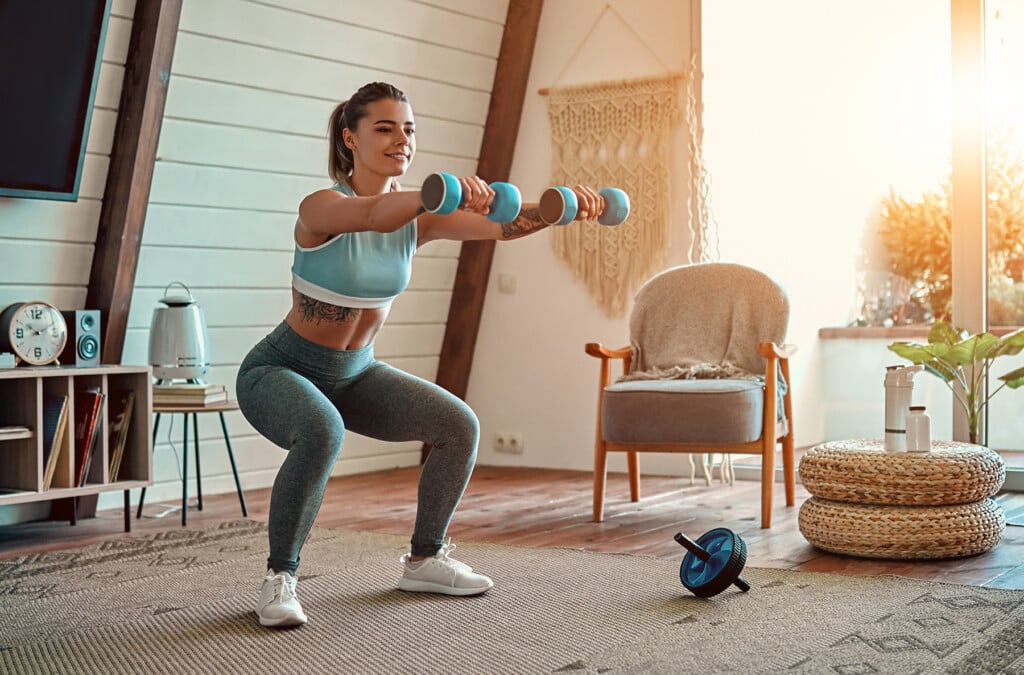
Holistic wellness is trending in 2026—for the body, mind, spirit, and the home, too. Fitness-minded folk are making room for exercise at home in newly imagined and carefully curated spaces.
“We’re not really calling them home gyms anymore,” says local designer Jodi Koch Peterman. “What people really want—and what they really need—is a wellness environment.”
Anyone can create an inviting wellness environment at home. All you need, Peterman says, is to lead with intention.

Making Space
Start by considering what’s most important to you and how those priorities might fit the space you have.
The process could include renovation or redesign of a garage or patio, a spare room revamp, an addition, or simply a space designation in an existing area, like the living room or bedroom.
While contemplating, Peterman suggests giving a few spaces a test run. Roll out a yoga mat in a different room or corner each day. Decide what feels right based on lighting, temperature, and other environmental factors.
“We have to have intention, and we have to have function,” she says. “Intention helps create what you want. And then we take the space you have and create that function and flow.”
Ideally, whether your square-footage allowance is minimal or expansive, you should designate a space that doesn’t require you to move furniture or equipment before the session begins.
The outdoors should also be considered when selecting your space. Access to a garden, patio, or yard helps create a grounding environment and beckons for outdoor activity when weather permits.

Zoning
To set the scene for your wellness routine, Peterman recommends what she calls “ritual mapping.” Here, one creates four intentionally designated zones: activation, movement, grounding, and recovery.
“You’re understanding how your body moves from warmup to workout to recovery, so the space follows you and not the other way around,” she says.
Even if your space is small, one corner can serve multiple purposes. For instance, you can install easily accessible storage for equipment swaps or multiple stations for the different stages.
Your activation zone should include what you need for your warmup routine, whether that’s a quick yoga flow or a jog on the treadmill. The movement zone is the main exercise area and should house key equipment like a yoga mat, free weights, and machines. Your grounding zone is where you incorporate soothing design elements, like plants and practical needs such as a water station. Your recovery zone is for cool-down activities, like stretching or walking.

Sensory Attuning
Be sure to consider lighting, temperature, texture, airflow, and sound—all factors which can impact mood and motivation.
Layered lighting is key to finding flow. Incorporate lamps, sconces, and other light fixtures to bring the lighting you need to each zone. Use cooler light temperatures for your activation zone but warmer for recovery. Consider a dimmer feature for overhead lighting or even biometric lighting, which aligns light temperatures with circadian rhythm.
Room temperature is important, too. When indoors, be sure you have a well-insulated space with temperature control, and add fans in corners with static air. Good insulation will help with acoustics too, improving sound quality and isolating noise for music and sound settings.
Performance flooring is key to the wellness sensory experience. You’ll want something durable that also absorbs sound and weight with ease. You can add rubber flooring mats and tiles over hardwood, tile, or concrete.
Peterman also recommends adding at least one sensory anchor—a grounding element like a stone sculpture, Himalayan salt lamp, statement plant, textured wall, or other design element that brings you joy.

From Vision to Fruition
Get creative when visualizing your new space. Curate inspiration and possible approaches. However, Peterman notes, it’s important to call in the experts once you reach a point where DIY won’t cut it.
“These rooms look simple, but they’re extremely technical; you’re managing moisture, heat, sound, airflow, storage, safety, and sensory queues,” she says. “A designer helps you choreograph the experience, not just build the room.”
If you want to spearhead your space as a DIY project, consider an hourly rate consultation with a designer for some expert guidance, or let the professionals take the pressure off your hands and bring your vision to full fruition.
“Think big, and we’ll take it from there,” Peterman says.
2026 At-Home Wellness Trends
Biometric Lighting
New smart technology adjusts light temperature throughout the day to mimic the natural light of the sun, nurturing well-being by tapping into our biological rhythms.
Welcoming Nature
Incorporate natural materials in design like stone, wood, salt, and greenery.
In-Home Recovery
Designate space for recovery beyond stretching. Permanent stations for massage and physical training professionals’ visits are on the rise.
Multisensory Motivation
Sensory elements like calming light, sound, and water features help center and motivate the mind and body.
Soft, Warm Color Schemes
Bright purple, yellow, and red are not the move for wellness spaces. Plain white and millennial gray are on their way out this year. However, creamy yellows, soft neutrals, and warm earth tones can be unexpected motivators.