New School Of Thought
The Barrett School innovates education for all learners
As a dad, Matthew Weinberg was certain his daughter Sienna’s future was promising. But when it came time to enroll her in school, frustration set in.
The 4-year-old girl had apraxia, a speech motor dysfunction. Her parents tried to enroll her in a variety of STEM-oriented schools—those that focus on science, technology, engineering, and mathematics—without much luck.
“They wrote her off because she couldn’t talk when she was 4 or 5,” Weinberg explains. By age 6, however, Sienna began talking, and her dad knew he needed to make a change in the local educational system.

Photo courtesy of the Barrett School
Weinberg and his brother, Alex, founded Destin’s Barrett School. The pre-kindergarten through twelfth grade private school opened its doors nearly two years ago with the ambition to improve the educational approach for all children, both neurotypical and neurodivergent.
The school, which currently has an enrollment of 130 students and operates out of a 30,000-square-foot Tuscan-style building in Destin Commons, focuses on the latest learning education models, which prioritize project-based learning. Enrollment goals are between 180 and 200 students, with a ratio of 10 to 13 students per teacher, though some classes are smaller.
Weinberg, a doctor of osteopathic medicine, also holds master’s and doctorate degrees in education and actively participates in research that presents new methodologies in education. “I knew that another type of teaching was needed for Sienna and that every child should get a chance to excel at school,” he says.
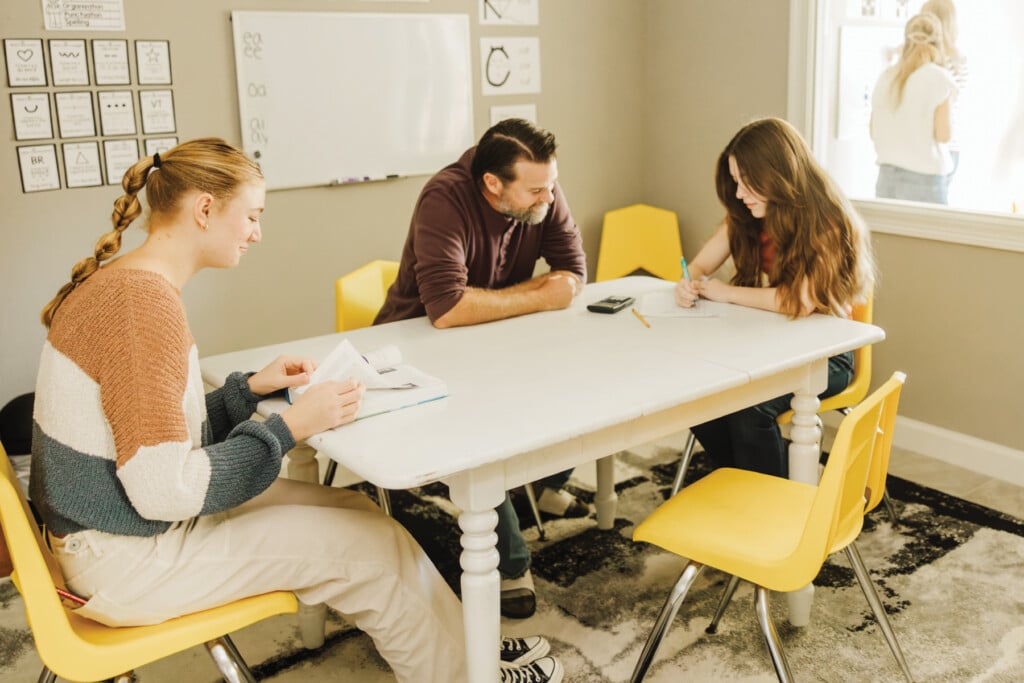
The Barrett School puts a priority on hands-on learning and student-centered activities, where teachers serve as facilitators and a child’s natural curiosity and problem-solving approaches drive projects.
“It’s active learning not passive,” Weinberg says.

Photo courtesy of the Barrett School
The school is in the process of attaining accreditation through Cognia, an organization that believes in global perspectives in education and helps schools implement its principles. The Barrett School also borrows some of its directives from practices used in Finland. The Scandinavian country’s educational system ranks No. 1 globally and is seated in the virtues of accessibility and fostering students’ well-being through creativity, critical thinking, and a passion for learning.
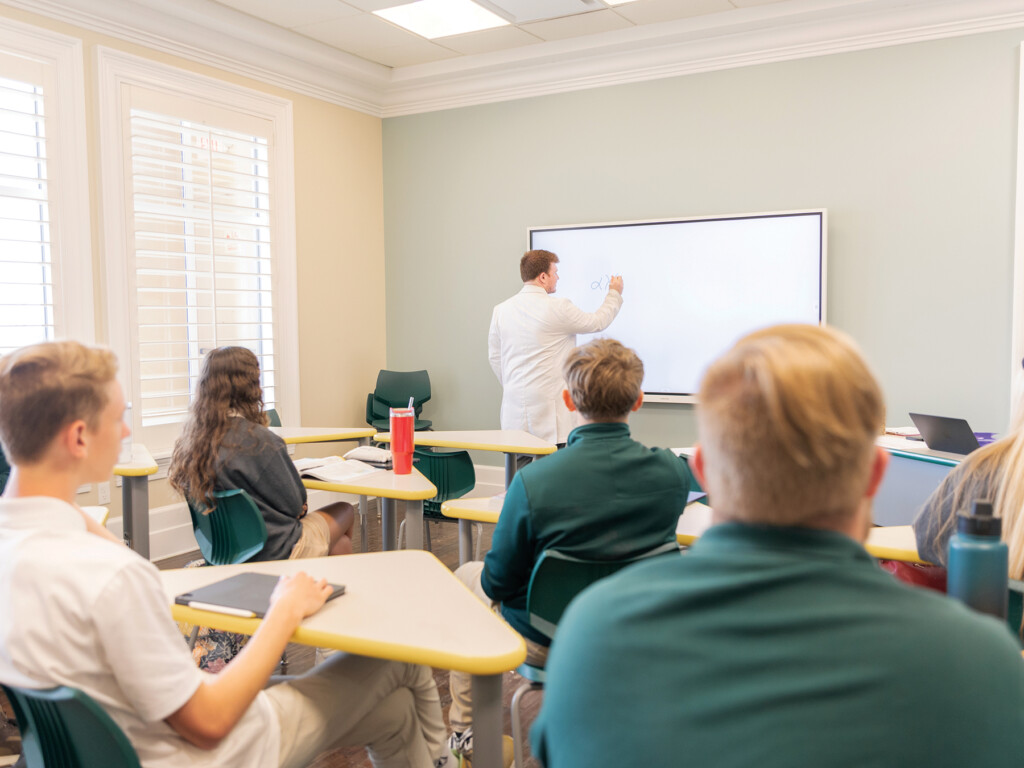
Rigor, however, is not overlooked. Weinberg teaches high school students and gives an example of how his algebra class will engage with artificial intelligence technologies to create a hands-on opportunity for learning.
“Right now, we are working on slopes, and I might show how it works with robotics,” he explains. “We basically turn the room into a Cartesian coordinate system by using tape to create an X axis and a Y axis so that the robot can travel in a certain line.”
Math lessons cross over to environmental science, he says, as the class might head outdoors to apply learned principles to hills and other land formations. This approach “is all about making the abstract real,” Weinberg says, contending that it results in a deeper understanding than traditional teaching methods that prioritize memorization and simple rule following.

Photo courtesy of the Barrett School
That thinking extends to the coordination of education for typical children alongside those with neurodiverse traits, pushing in support when needed and striving to raise the educational bar for all students—and not just with STEM subjects—and demonstrates how all kinds of thinking exist in the world outside the classroom.
The school offers a robust arts education, spearheaded by Weinberg’s brother Alex, who studied film in college and previously worked for Disney as a cartoon artist and digital creator. The school has a digital and film photography laboratory as well as a production studio that allows students to explore film production and editing. Equipment is in place for a future podcasting program. A full-time music teacher and part-time after-school music instructor—both classically trained—offer music instruction and access to orchestral instruments.
The school also has a small museum for student use. Exhibits are available on three floors of the school and feature dinosaur and mammal fossils that students can touch and feel as well as artifacts representing Egyptian, Babylonian, Greek, Roman, Native American, and early American cultures.
“I wanted [the school] to be a living, breathing kind of organism where you’re not just taught things, but you become curious about them,” Weinberg says of the school where his now 10-year-old daughter is learning and thriving. “We follow a protocol that is on the edge of the newest kinds of ideas in education.” thebarrettschool.org