The Sea Cure
The ocean’s benefits to the mind, body, and spirit
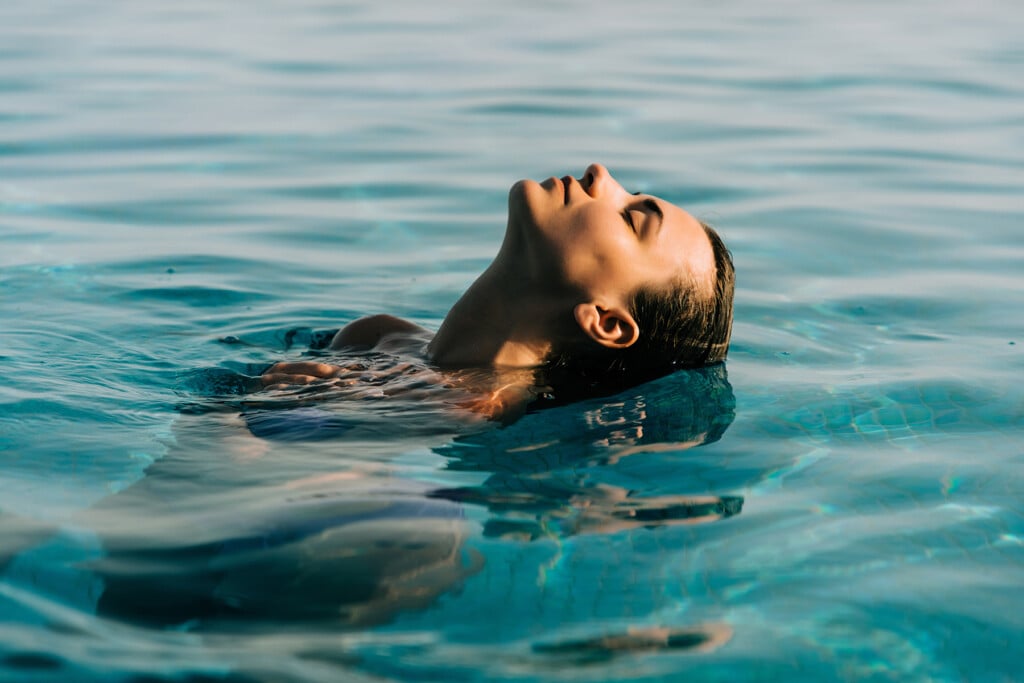
Known for their early approaches to spa therapy, ancient Greeks and Romans had an affinity for “taking the waters” in bathhouses, freshwater pools, and sea baths.
Some thousands of years later, the Regency Era revived an ocean-forward approach to wellness in the form of British physician Richard Russell’s 1750 claim of “the sea cure,” prescribing seaside wellness visits for conditions ranging from melancholia to leprosy.
In 1869, French doctor Joseph de la Bonnardiere set up the first thalassic therapy center and later coined the formal term “thalassotherapy,” meaning the use of oceanic elements such as seaweed and saltwater for therapeutic applications.
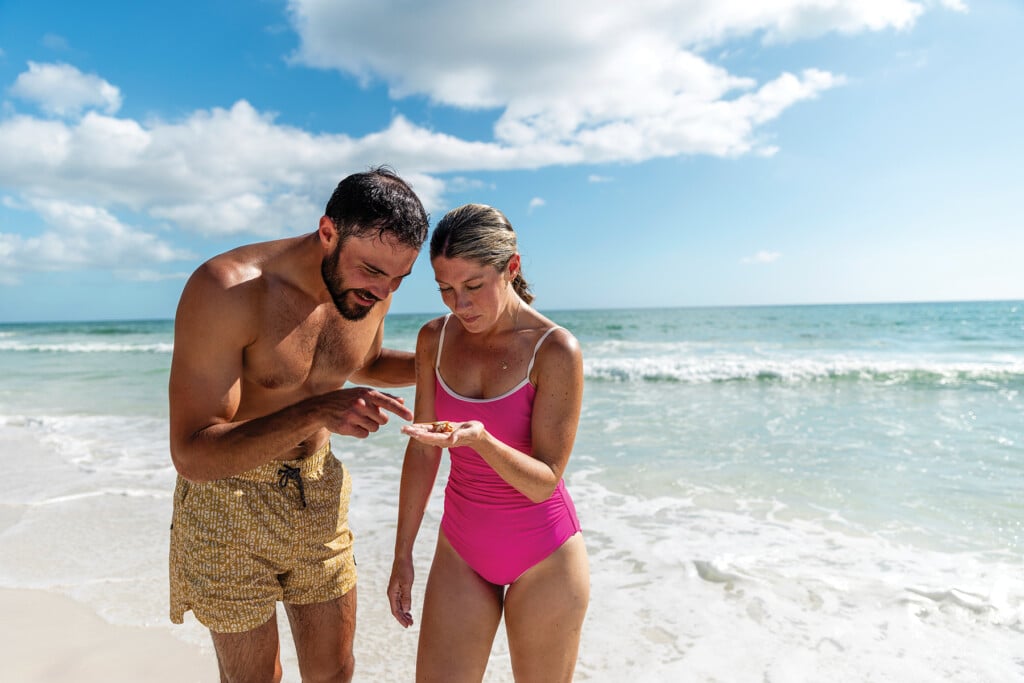
Today, we know better than to assume that a day at the beach is the cure-all prescription for any ailment. Still, Emerald Coast locals know there’s something to be said about the healing powers of the sea.

The Sanditon Cure
In Jane Austen’s unfinished 1817 novel Sanditon, one Mr. Thomas Parker is enthusiastic about the sea cure and plans to open a seaside resort.
“A little of our own bracing sea air will soon set me on my feet again. Depend upon it, my dear, it is exactly a case for the sea,” Parker says in the novel.
The idea of wellness retreats had become popularized in the decades following Dr. Russell’s claims, and English elites, including Austen and even King George III, received frequent treatment at sea baths.
Modern wellness retreats often focus on healing the mind and spirit. However, a 2020 study proves benefits for the body, too. Reported by the National Institutes of Health (NIH), the study researched the effects of thalassotherapy on 62 post-stroke patients with resulting mild to moderate disabilities.
The patients followed an aquatic therapy regimen in a seawater pool at around 90 degrees Fahrenheit for 45 minutes a day, five days a week for two weeks. Results showed “a significant improvement in all outcomes measured,” according to the report, offering short-term relief, pain reduction, and improved overall function.
But what happens when you leave the beach?
“The fact that the effects weren’t [long-lasting] in that study is not a discouragement to me because we are meant to operate in rhythms,” says Colleen Wenner, a licensed mental health counselor and clinical director of New Heights Counseling in Fort Walton Beach. “If we nurture an internal rhythm in our lives, we can nurture our physical health and mental health beyond the quick fix everybody’s looking for these days.”

Sea Meets Spa
Sea bathing at Sanditon would have involved fully clothed dips in the ocean during cold winter months to revitalize the immune system. Modern thalassotherapies recognize the therapeutic effect of warmer waters in the summer and temperature-controlled spa baths.
No matter the temperature, local aesthetician Shanelle Lucas says trace minerals in seawater—such as magnesium, calcium, and potassium—are responsible for improved skin health after a swim.
Cellular functions such as sleeping and thinking, as well as functions of the adrenal glands and lymphatic system, depend on magnesium. Calcium stimulates the cellular metabolism, and potassium promotes hydration.
“Those minerals are detoxifying, or ‘flushing out,’ the body,” explains Lucas, spa director at Hilton Sandestin Beach’s Serenity by the Sea Spa. “That’s what’s helping to repair those cells.”
“The sea is so nurturing, so re-mineralizing, and it’s so good for you because it fills your cup with all of the trace minerals that your body needs,” says Jerralyn Karakorn, Serenity’s assistant spa director.
Lucas says benefits also include stress reduction, enhanced focus, and mood elevation. Karakorn also notes that seaweed and algae treatments can improve skin and rheumatic conditions, like psoriasis, eczema, fibromyalgia, and gout.
A 2024 narrative review from the National Institutes of Health cited 16 studies evaluating the efficacy of thalassotherapy in skin disorders like psoriasis and rheumatic conditions like fibromyalgia. Treatments showed “significant improvements in disease severity and patient quality of life,” according to the study.
“I remember having a client with fibromyalgia; we did the Ocean Wave massage using Phytomer’s products, and that really helped her relax,” Karakorn says. “It helped her muscles get out of that fight or flight stage.”
Karakorn commends partner brands Voya and Phytomer for their detoxifying and repairing ingredients like seaweed, as well as those beneficial trace minerals.
“Their products can do a lot for cellular fatigue. They’re going to remineralize your body,” Karakorn says. “When you’re getting your trace minerals, your body is
working better.”
Lucas says that receiving treatments in proximity to the ocean adds another layer to the healing benefits, combining dermatological health with psychological well-being.

Rhythm of the Ocean
Tides and shifts in wind keep waves rolling to shore in a steady rhythm. Wenner recommends regular trips to the ocean to help us feel synchronized and regulated.
“We have all this compressed anxiety and energy inside of us, and when you get back down to nature—and the ocean specifically—it provides that rhythm,” Wenner says. “The stress reduction alone from a 10-minute trip to the beach can really help.”
Wenner recommends daily trips up to an hour. For busy schedules or those who can’t get to the beach regularly, Wenner says we don’t always have to have our toes in the sand to reap the ocean’s rewards.
“Going to the beach for a trip is fantastic,” she says. “Then, come back and find a way to go there in your mind.”
Wenner teaches patients a grounding technique with bilateral stimulation to take their minds to a calming place like the beach. This form of meditation is often used during therapy sessions as a guided practice; here, a counselor or therapist will talk an individual through the practice to help immerse them. However, patients can practice this technique anywhere and anytime with a little concentration—
and imagination.
For those who have difficulty focusing, bilateral stimulation can help. First, create a soothing rhythm through a physical action like a rhythmic foot tap or eye movement. This action should be in a back-and-forth motion, like a metronome. This steady pulse returns us to rhythm, creating focus and dispelling distractions of the mind. Then, imagine the place your mind can escape to, feeling fully free and peaceful.
You can also enhance immersion with sensory cues like essential oils that elicit beachy scents or a recording of beach sounds, like waves and seagulls.
“Your olfactory glands [are] rooted to the first developed part of your brain,” Wenner says. “Your sense of smell creates an ability to remember more quickly than any other sense.”
We can perform this meditative technique from anywhere: at home, in the car on a lunch break, or hiding in the bathroom during an overwhelming party or event.
“Stay there as long as you need to,” Wenner says. “And remember that you can go back there in the middle of tension and stress.”
No matter where we find ourselves, we can always return to the ocean. Sometimes, the sea cure is all we need.